Belgium has at last a new government, after 541 days of negotiations since the parliamentary elections of the 13th of June 2010.
It is a coalition of six parties: French-speaking socialists (PS, 26 seats of the 150 in the Lower house), French-speaking liberals (MR, 18 seats), Flemish christian democrats (CD&V, 17), Flemish socialists (SP.A, 13), Flemish liberals (OpenVDL, 13) and French-speaking christian democrats (CDH, 9). Together they have a large majority of 96 seats. There is some critic in Flanders that the three Flemish parties taken together fall short (43 seats) of the majority of the Flemish seats (88) in the Lower House, although this is not a legal obligation.
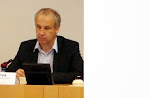
The new prime minister is Elio di Rupo, the mayor of the city of Mons in Hainaut province near the French border, and since 1999 the president of the PS. He is the son of an Italian immigrant from the Abbruzzi mountains an was already deputy prime minister between 1994 and 1999. He was a member of the EP between 1989 and 1991 before he started his carreer in national Belgian politics. Mr. di Rupo is 60 and is learning to speak Dutch, but there is criticism in Flanders on his poor command of that language. He is the first prime minister from the French-speaking parties of the country since 1974, and the first socialist in that function since then.
Mr. di Rupo succeeded where others failed in forming a government. The breakthrough came on September the 15th when he reached an agreement on the thorny issue of the status of the bilingual electoral district of Brussels-Halle-Vilvoorde. After that he achieved a global institutional agreement in october and an agreement on budgetary cuts in 2012 for an amount of the equivalent of 3 % of gdp.
Yesterday the new cabinet was formed, again after night long negotiations that started at 5.30 pm on Sunday afternoon and lasted 24 hours without interruption. There are 13 ministers and 6 underministers. Most ministers are the same personalities as in the previous government, but generally on different posts. No MEP will enter the new government.
The Flemish nationalists are now the main opposition. In French-speaking Belgium the greens are the only opposition, but they are ready to give the government the needed two thirds majority to vote the institutional agreement.
It is still to early to say anything reasonable about the stability of this new government, although most observers agree that the bad opinion polls of last weekend should strengthen the will to remain together some time.